1st century: Rome arrives in Córdoba
Corduba was one of the most important cities of Roman Hispania. Capital of Baetica, seat of governors, birthplace of Seneca. And like any self-respecting Roman city, it had baths. The system was clear: frigidarium, tepidarium, caldarium. Cold water, warm water, hot water. Underground furnaces — hypocausts — heated the floor and the walls of the hot rooms.
The remains found beneath our building on Calle Almanzor date from that era. They are not the most spectacular remains of Roman Córdoba — that honour goes to the Temple on Calle Claudio Marcelo or the Roman Bridge — but they have something none of those monuments has: continuity. Here, the water never stopped flowing.
8th-13th centuries: the Arab hammam
When the Arabs arrived in the Peninsula in 711, they did not have to invent bathing culture. They inherited it from Rome and perfected it. They kept the cold-warm-hot sequence but added steam, aromatherapy, massage and a sense of ritual that Rome did not have. Bathing stopped being mere hygiene and became care for body and spirit.
Córdoba, as capital of the Caliphate, was the city where that culture reached its highest expression. The chronicles speak of 700 public baths. Water was a sacred element — ablution before prayer, ritual purification, the pleasure of a hot bath at the end of the day. Everything revolved around water.
15th century: the Henestrosa family baths
The Reconquista swept away most of Córdoba’s hammams. But on Calle Almanzor, the baths survived. Documentary sources record the existence of baths belonging to the Henestrosa family on this very site during the 15th century. They were no longer public baths open to the community — the pressure against Moorish customs prevented it — but the water kept flowing between these walls.
1930: the coins of Don José Araujo
Around 1930, Don José Araujo and one of his brothers found a cast-iron vessel full of old coins while going about their daily work. Their father was a muleteer on the Guadalquivir. With the sale of those coins, the family acquired the house at Calle Almanzor 18 — among other properties — and in time the excavations of the building itself confirmed that beneath that floor there had been 15th-century public baths. The discovery set in motion the process that, decades later, would lead to the recovery of this space.
Today: the water keeps flowing
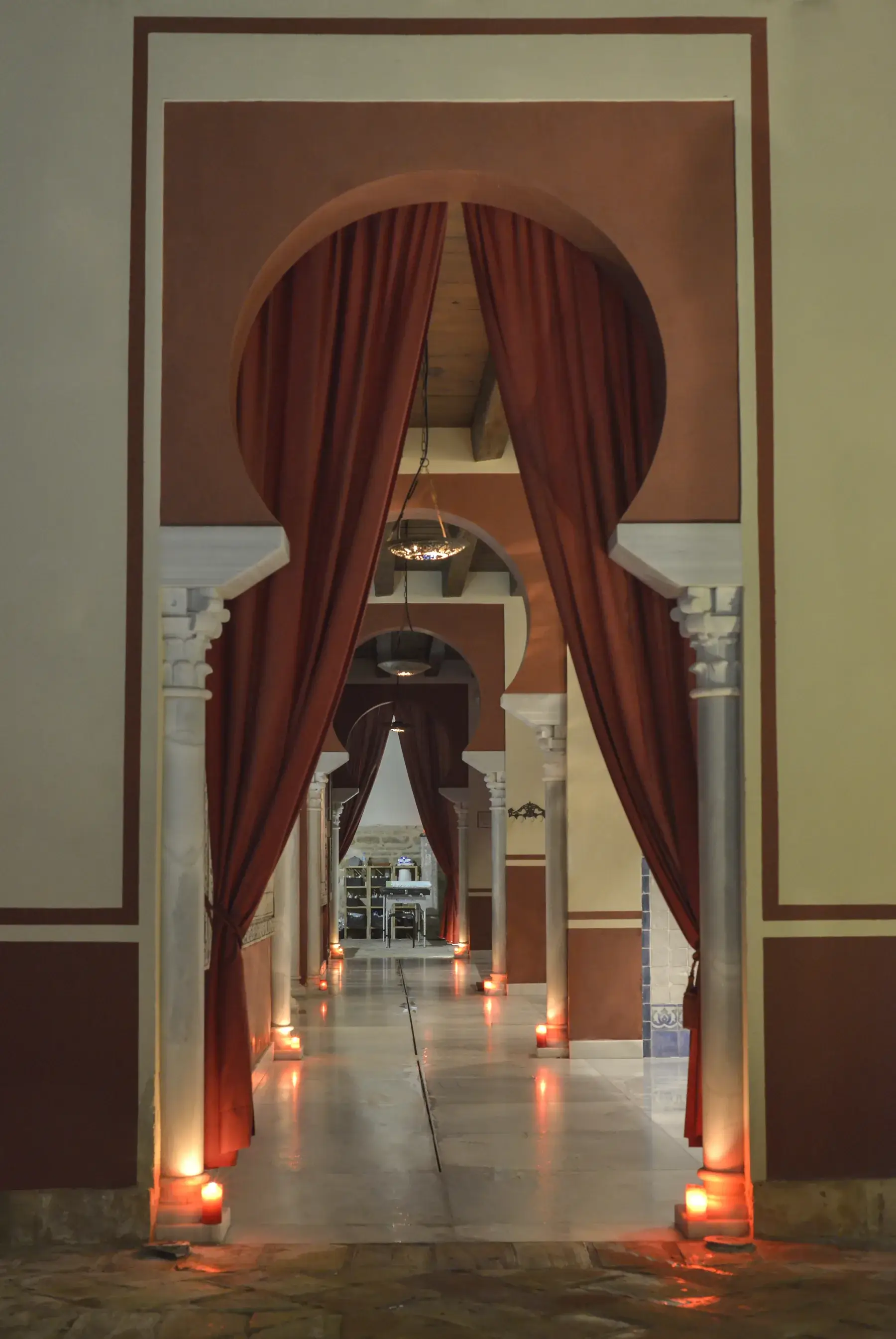
When you enter the Arab Baths of Córdoba and dip your feet into the hot pool, you are not doing something new. You are repeating a gesture that has been made in this very place for two millennia. The technology has changed — there are no Roman hypocausts under the floor any more — but the essence is identical: hot water, steam, thermal contrast, rest.
It is not a reconstruction. It is not theming. It is the continuation of something this land needs as much as air.